Article
Article
A Journey on the Tagus
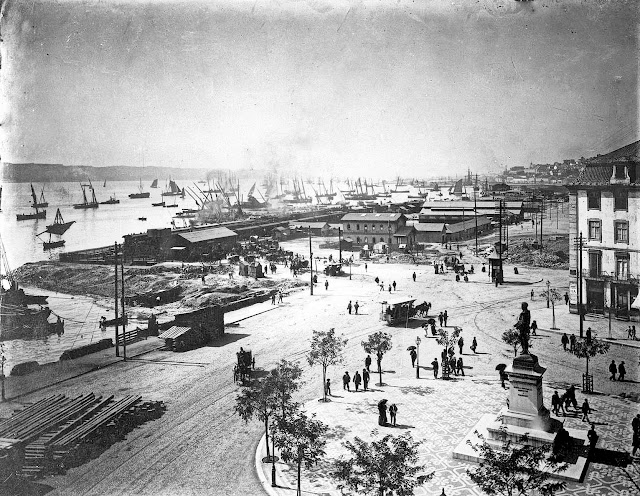
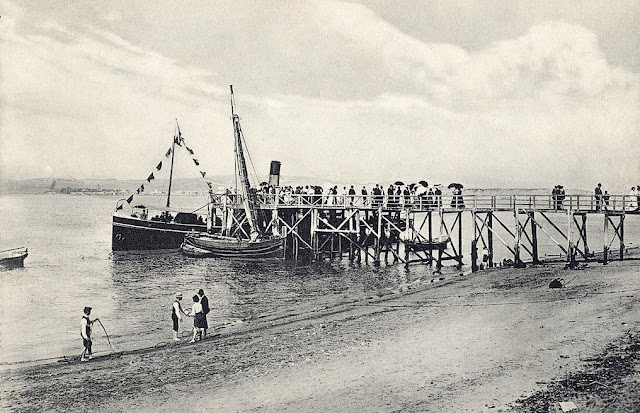
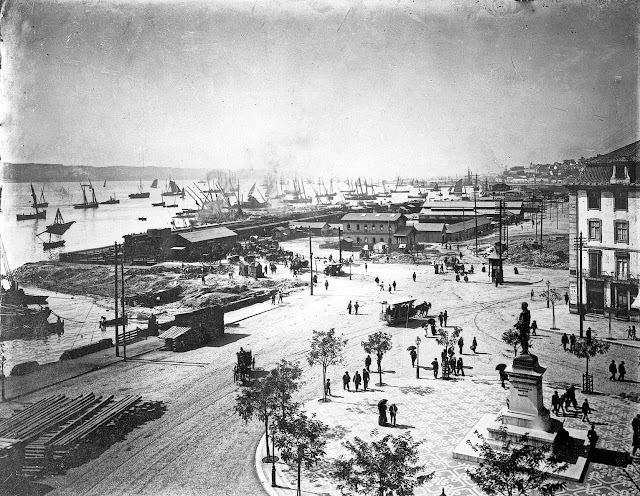
When the steamer departs from Cais do Sodré toward Cascais on a September morning in 1876, the Tagus stretches before the passengers "in all its majesty, like a small Mediterranean," sparkling beneath the aquatic haze "like a steel breastplate covered by a gauze veil."
But this visual splendor does not deceive Ramalho Ortigão: the "celebrated Tagus" has lost much of its ancient fame and "has also lost something of its ancient waters." The writer evokes testimonies from Friar Bernardo de Brito about boats that sailed from Lisbon to Toledo, the marshlands that Virgil said were fertilized by the wind, the reeds that provided quills to Roman writers, the gold that gave a scepter to King João III. Above all, he laments that "the towering galleons" of the Renaissance no longer depart from that bay, those that swept the old traditions of the Phoenicians and Normans from the ocean to "open the field to the history of new deeds."
The excerpt synthesizes the fundamental tension of "The Beaches of Portugal": between glorious past and mediocre present, between lost grandeur and insufficient modernization. Ramalho's irony is subtle but devastating: "in compensation" we have the Landfill with smoking chimneys, factories, gasometers, hotels with English flags and American carriages—all symbols of an imported, cosmopolitan progress that only proves "that something has been done in the World in these three centuries that we have spent remembering" the glory of the Discoveries. The contrast between the galleons that conquered oceans and the "Brazilian mules" pulling American carriages is cruel: Portugal replaced action with remembrance, epic with nostalgia.
Today, the visitor who navigates the Tagus continues to see a majestic but transformed river. Industrial chimneys have given way to contemporary architectures, steamers to modern ferries, nineteenth-century hotels to tourist complexes. Observing the estuary with "Ramalho's eyes," one can reflect on how Portugal's relationship with the Tagus—and with its own past—perpetually oscillates between imperial memory and peripheral reality, between evoked grandeur and imported modernity, always maintaining that constitutive melancholy of those who were great and know they no longer are.
Gallery