Article
Article
Azambuja: The Landscape of Ribatejo
When Ramalho Ortigão crosses Azambuja in the late nineteenth century, he finds a Ribatejo landscape in full threshing season: "in the golden plain, among the haystacks and sheaves, the great strings of horses being led, trotting in circles on the threshing floors."
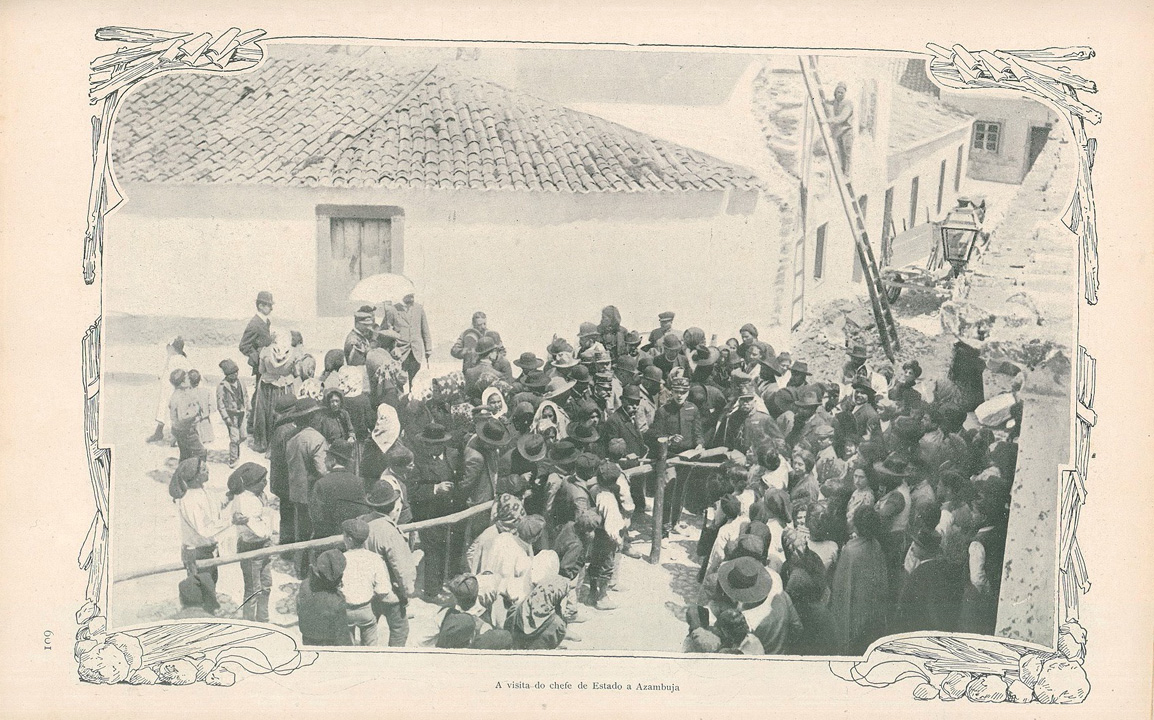
Behind the small railway station—the railroad had arrived in Ribatejo transforming the town's relationship with Lisbon—there was "a beautiful gathering of wagons, stagecoaches, char-à-bancs and calèches," enveloped in "reflections of gold" by the overhead sun, illuminating with "a light diamond dust" everything: the vehicles, the eucalyptus leaves, the mules' harnesses, the beggars' rags, and the "characteristic breeches of the Estremadura peasant, made of patches in all the shades of blue from the Alcobaça weaving." The Azambuja that Ramalho observes is a town with centuries of history—it had received its charter in 1272 from D. Rui Fernandes, 4th Lord and Mayor, being then already a structured community with municipal aldermen, notary, and prior—situated on the ancient Tagus frontier during the Christian Reconquest. Founded in 1199 when King Sancho I donated the town to the Flemish crusader D. Rolim, Azambuja ("wild olive tree" in Arabic) had developed as a Ribatejo agricultural center, maintaining over the centuries its grain-growing vocation and rural identity that Ramalho still documents in the nineteenth century.
What truly captures the chronicler's melancholic attention is the fate of the "infamous pine forest of Azambuja." That pine forest which "in another time" had fed the Portuguese romantic imagination as a national pendant to the "melodramatic terror of the caves of Salamanca"—refuge of bandits, scene of assaults, space of picaresque adventures with Camila bound, doubloons and blunderbusses—now remained "only a few sad, thin, nostalgic pine trees." The forest had been devastated: "bare and torn, full of patches and bald spots," it no longer sent to the echoes or to the traveler "but a whistled and hoarse moan of a dying forest, split by axe blows." The dying pine forest dropped "from time to time some dry pine cone, which falls from above and rolls dully on the soft carpet of pine needles, like the sad tear of things." This powerful image—the fallen pine cone as "tear of things"—reveals the full elegiac dimension of Ramalho's gaze: he mourns not only the ecological destruction (an avant la lettre environmental concern), but above all the loss of a mythical, adventurous, literary Portugal. The pine forest was not just forest: it was a romantic topos, an identity space, a collective memory. Its destruction by the "axe blows" of progress symbolizes the death of a certain idea of Portugal—one that still held the memory of bandits, adventure, danger, national picturesque.
Today, visitors to Azambuja find a town profoundly transformed by its proximity to Lisbon and integration into the metropolitan area. Of the pine forest that so moved Ramalho for being moribund, nothing remains—it was completely eradicated, replaced by intensive agricultural fields and scattered urbanization. The railway station remains, now integrated into the Northern Line, and continues to be the main connection point between the town and the capital. The medieval historical heritage—the parish church where D. Maria Rolim, daughter of the Flemish founder D. Rolim, was buried, and the vestiges of the ancient municipal organization established in the 1272 charter—can still evoke the centuries of history that preceded Ramalho's passage. Observing with "Ramalho's eyes," one can reflect on how nineteenth-century modernization—the railroad, deforestation, economic integration—irreversibly transformed the Ribatejo landscape: those "blue patched breeches" have disappeared, the pine forest has become literary memory, but the "golden plain" of grain cultivation remains, continuing to define the agricultural identity of Ribatejo. The question remains whether anything was gained by the destruction of that pine forest which, even dying, could still weep "the sad tear of things."