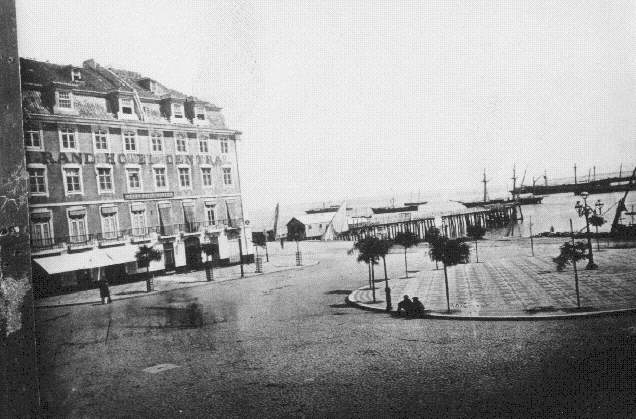
Ramalho's text celebrates not only the journey, but the very ritual of departure: the dawn, the binoculars, the lit cigar, the climb to the steamer's deck. The writer transforms the mundane into a literary event, revealing how Lisboetas discovered the sea not as a necessity, but as pleasure and health. The description also reveals the democratic character of these bathing excursions, accessible for the modest sum of ten tostões, at a time when bathing tourism was beginning to cease being the exclusive privilege of the aristocracy.
Today, the visitor no longer finds the steamer pier nor the Café Grego. In the same location stands, since 1928, the Cais do Sodré Railway Station, designed by Pardal Monteiro in elegant Art Deco language, with its bas-reliefs and tile panels celebrating allegories of the cult of the machine and of labour. Modern architecture replaced the aquatic embarkation with the electric train, but the function remains: this continues to be the departure point for the Cascais line. Looking at the symmetrical façade and the reinforced concrete structures, one should imagine, with "Ramalho's eyes", the Tagus that beat there, the steamers that whistled, and all that morning Lisbon that rose early to conquer the sea.