Article
Article
Caldas da Rainha: The Beautiful Village
In the late nineteenth century, Caldas da Rainha presented itself as "the beautiful town" that in Portugal "most resembles the French and German spa towns," according to Ramalho Ortigão's observation.
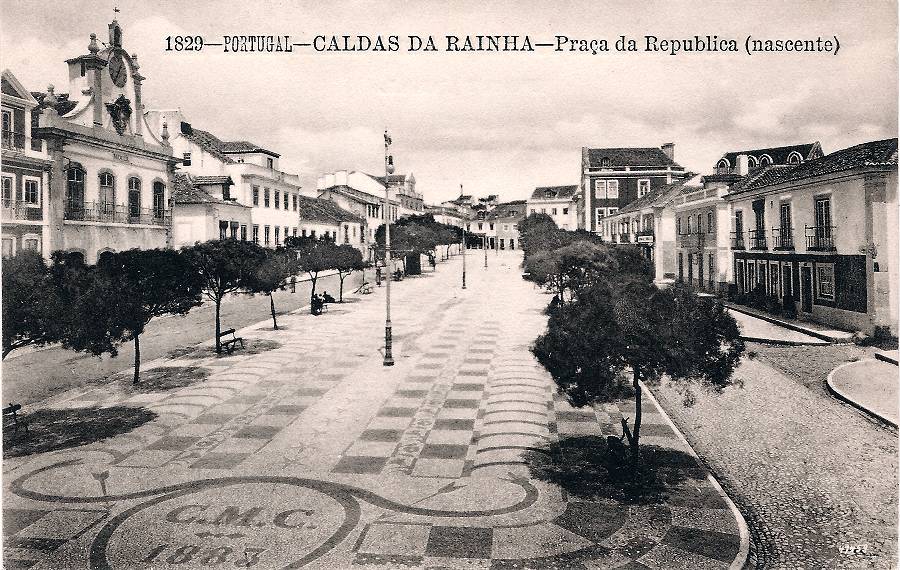
The thermal resort, founded by order of Queen Leonor in the late fifteenth century after the monarch had experienced the therapeutic virtues of the waters, had consolidated its healing vocation over the centuries. King Afonso VI had rebuilt and expanded the thermal hospital, the royal family and court visited Caldas annually, and in the nineteenth century—the golden age throughout Europe for thermal resorts—the town had become "the chosen place of the well-to-do class." But Ramalho does not hide the shortcomings: Caldas lacked the magnificent Trinkhalle or the Conversations-haus of Baden, or the Cursaal of Wiesbaden with its "Ionic portico" and "arcade surrounded by luxury shops," nor sumptuous theater, nor painting galleries, nor grand hotel or restaurant, nor pavilions, cottages, or chalets. What they possessed, however, was essential: "excellent trees," the "beautiful park called Copa," the "lovely avenue of poplars," the willows, acacias, and pine trees of the woods—"sufficient shade, in short, to spend the whole day in the fresh oxygenation of open air," the primary condition for treating "anemic Lisbon ladies, withered during Winter in the biting and wasting atmosphere of drawing rooms and theaters." The furnished houses for rent, despite the "almost rudimentary modesty of their interior comfort," were "fresh and well washed with light," the drinking water from Quinta da Boneca was "very good," and the food "simple and healthy" included the famous cavacas, trouxas, egg cheeses, and Marvão pastries.
The excerpt reveals the characteristic ambivalence of Ramalho's thinking: on one hand, the professed admiration for European thermal models (Baden, Wiesbaden) with their monumental architecture and luxury infrastructures; on the other, the recognition that Caldas possessed the essential—air, water, shade, simplicity. The chronicler values above all the "sociability" practiced there: "the social customs between bathers and travelers have a particularly affectionate and sympathetic family character." The indigenous people were "cheerful and affable," the visiting population flocked to the "consecrated general meeting points"—in the morning to Copa park where whist and boston tables, croquet and ring toss functioned "beneath the trees"; in the afternoon to the woods with "garden games"; at night to the club where dancing went on "from eight o'clock until midnight." The only criticism is delightfully light: "there is perhaps a trifle too much waltzing than would be useful, and a lawn-tennis court is lacking." This ironic observation encapsulates Ramalho's civilizational project: to modernize Portugal according to European standards, but without losing national authenticity—less idle waltzing, more hygienic sport.
Today, visitors to Caldas da Rainha find a city that maintains its thermal and artistic vocation recognized by UNESCO as a Creative City. The Thermal Complex preserves the old Thermal Hospital (the oldest thermal hospital in the world still in operation) and the Hospital and Caldas Museum, where Queen Leonor's Book of Commitment is displayed. D. Carlos I Park, successor to the "Copa park" praised by Ramalho, is today considered one of the richest in biodiversity in the country, with its artificial lake and tree-lined avenues designed by Caldas architect Rodrigo Berquó. The José Malhoa Museum, housed in the first Portuguese building constructed from scratch as a museum, celebrates the naturalist painter born in Caldas. Observing with "Ramalho's eyes," one can reflect on how the town partially fulfilled the chronicler's dream: it maintained the "fresh oxygenation" of the trees and "affectionate sociability," gained museums and cultural spaces, but never transformed into a Portuguese Baden or Wiesbaden—it remained authentically Caldense, privileging local identity over cosmopolitan imitation, balancing therapeutic thermalism and artistic creativity in that synthesis that Ramalho intuited but never lived to see fully realized.