Article
Article
Ericeira by the Sea
When Ramalho Ortigão visits Ericeira outside the bathing season, in the late nineteenth century, he finds a town that surprises him with its uniqueness in the national panorama. "If we except Olhão, in the Algarve, this is the cleanest land in Portugal," writes the chronicler, impressed by streets "scrupulously swept like those of a garden," windows "clearly washed," and exterior walls whitewashed.
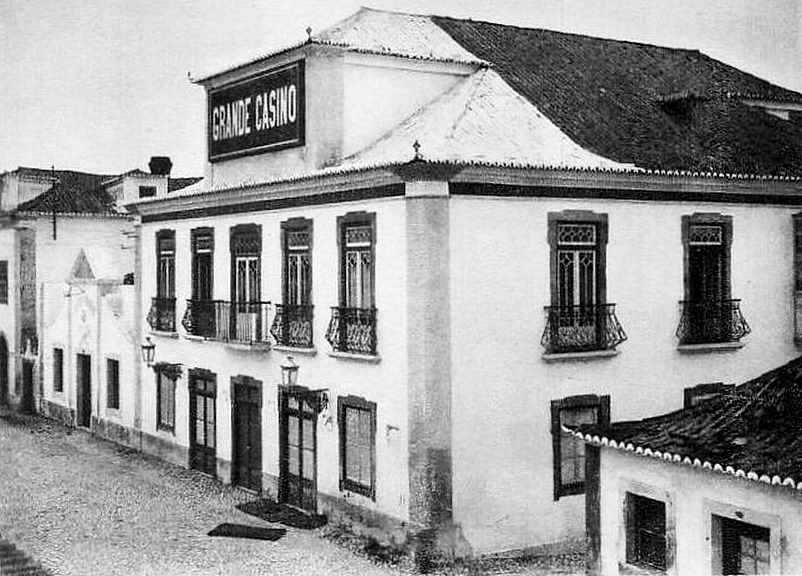
The town was organized around the Chapel of Santo António, "overlooking the sea," a meeting point for bathers at sunset and moonrise. Two bathing beaches divided the settlement: the southern one, "perfectly sheltered by a curtain of rock that surrounds it like a screen," was the most pleasant; the northern one, with small houses "almost all single-story, barracks-like," served a more modest population. The occasional presence of the royal family—Queen Maria Pia had bathed there in 1864, Queen Amélia had visited the town in 1891—conferred some social distinction upon Ericeira, although the town remained essentially an economical refuge where "a family of four" could lodge "comfortably for six pounds a month." The daily stagecoach service to Sintra, established in 1891, facilitated access to "Lisbon elegance," progressively attracting the bourgeoisie from the Lisbon region and the West.
What truly fascinates Ramalho in Ericeira is not the landscape or the beaches, but the peculiar maritime civilization he finds there. The "indigenous population, composed mainly of seafarers," was "peaceful and prosperous," which protected the bather from "the exploitation that is the object in lands where the inhabitant is indolent and poor." Even more remarkable: visiting the houses at nightfall, the writer observes through the windows the signs of a "serene, well-administered life, with a regular budget, with acquired habits, with family customs"—the parlor lamp, the carpet on the center table, the varnished birdcage, the coat rack, the vase with flowers, the mirror. And then occurs the phenomenon that Ramalho considers "extraordinary and very rare in Portugal": in two houses he glimpsed "some books." In a nation where in the small houses of the provinces "the book is a luxury object that no one allows themselves" and "the so moralizing habit of reading in the evenings" is "a curiosity that no one has, a dignity that no one professes," Ericeira presents itself as a civilizational exception. The writer attributes this "artistic inclination" to "the education that seafarers acquire in their travels," combined with "the special nature of the soil, which by its aridity around the town forces the inhabitant to retreat and seek within their home the distractions that the countryside and landscape do not provide."
Today, the visitor to Ericeira can still recognize the town described by Ramalho—although transformed into a European surfing capital, it maintains the character of a maritime settlement organically linked to the ocean. The cleanliness that impressed the nineteenth-century chronicler persists in the whitewashed streets, the Chapel of Santo António remains "overlooking the sea," and maritime culture continues central to local identity. Observing with "Ramalho's eyes," one is invited to reflect on how the relationship with the sea shapes mentalities: the seafarers of Ericeira, through their openness to the world brought by travel and the domestic retreat imposed by the territory's aridity, created a rare synthesis between cosmopolitanism and intimacy, between oceanic adventure and literary culture. One can question whether that "artistic inclination" that Ramalho detected survives in an era when tourism has replaced fishing, and whether Ericeira's houses still keep, beyond the surfboards, those "some books" that seemed to the writer so rare and so precious.