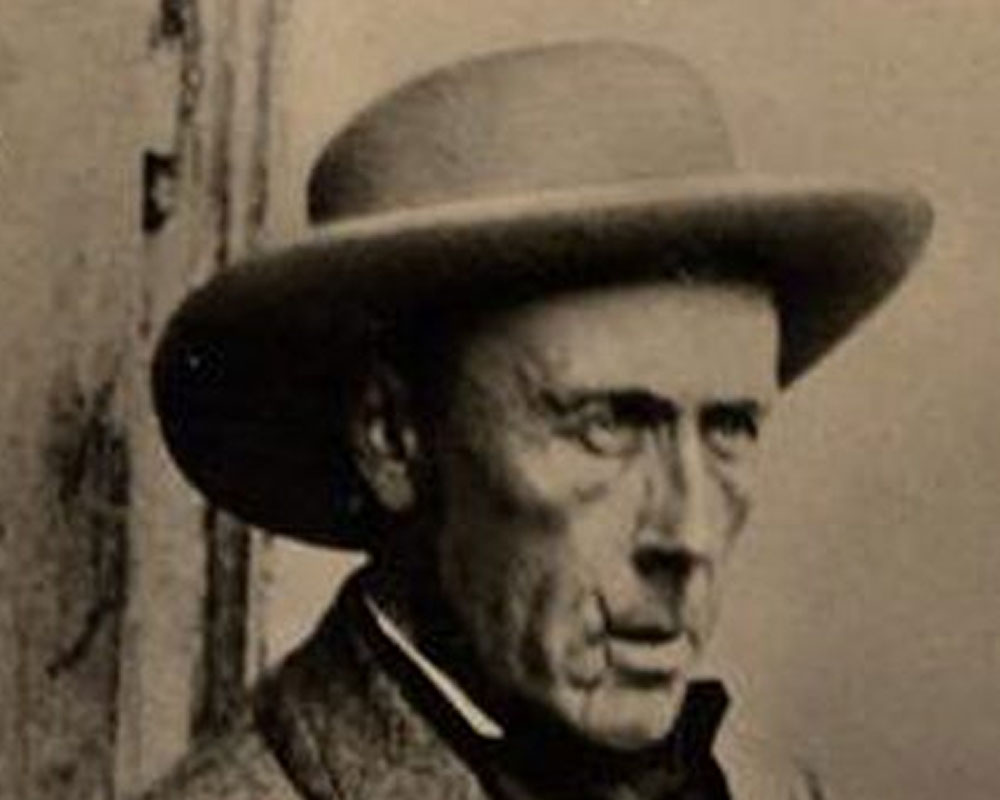
This posthumous consecration sealed the recognition of an extraordinary life that radically transformed the way the Portuguese understood their past and thought about their future.
From Modest Origins to Intellectual Awakening
Alexandre Herculano de Carvalho e Araújo was born in Lisbon on March 28, 1810, into a family of modest means but marked by cultural literacy and ascending ambition. His maternal ancestors had been connected to civil construction since at least the time of his great-grandfather, a master builder in the construction of the grand Palace and Convent of Mafra. His father, son of a grain merchant, had followed the path of civil service, working in the public loans department.
and family difficulties prevented young Alexandre from attending University, closing doors that his intelligence would have deserved open. He studied Humanities at the Congregação da Oratória, an institution where he began the meditative reading of the Holy Scriptures, a practice that would profoundly shape his worldview. To prepare for entry into civil service, he attended a practical Commerce course and studied Diplomatics at the Torre do Tombo, learning there the fundamentals of historical research that would prove decisive.
At eighteen, his literary vocation was already manifesting vigorously. Self-taught, he mastered French and German, devoured works by foreign romantics, and frequented the literary salons of the Marquesa de Alorna, a figure he would always recognize as one of his fundamental mentors.
The Formative Exile and Triumphant Return
In 1831, involvement in a conspiracy against the Miguelist regime forced him into exile. First in Plymouth, England, then in Rennes, France, these years of forced absence proved formative. He perfected his study of history, familiarizing himself with historians such as Augustin Thierry and Adolphe Thiers. He immersed himself in the works of those who would become his literary models: Chateaubriand, Lamennais, Klopstock and, above all, Walter Scott, whose historical novel fascinated him.
In 1832, he returned to Portugal by way of arms: he participated in the landing of liberal troops at Mindelo and in the defense of Porto during the siege. Appointed second librarian, he was tasked with organizing the municipal library's archives, a task he fulfilled with meticulous dedication.
The Theorist and Propagandist of Romanticism
1834 and 1835, he published fundamental articles on literary theory in the Porto magazine "Repositório Literário", later compiled in the "Opúsculos". In 1836, due to disagreements with the Septembrist government, he resigned from his librarian position and published the pamphlet "A Voz do Profeta". Transferred to Lisbon, he assumed the direction of "O Panorama", the most important literary magazine of Portuguese Romanticism, to which he contributed numerous articles, narratives, and translations, not always signed.
The work, in all its extent and diversity, displays profound coherence: it obeys a romantic-liberal program that guided not only his intellectual work but also his very life. A poet, novelist, historian, and essayist, he was also an archivist, journalist, editor of historical documents and, in his final years, a dedicated farmer.
The Scientific Historian and the Great Controversies
In 1839, he accepted D. Fernando's invitation to direct the royal libraries of Ajuda and Necessidades, continuing historical research work that would culminate in the four volumes of "História de Portugal", published over the following two decades. This pioneering work applied rigorous documentary research methods in Portugal for the first time, making Herculano – in a sometimes exaggerated but still highly significant way – the founding father of the "scientific" method of researching and writing history in the country.
At that time, he became involved in a resounding controversy with the clergy by questioning the historicity of the miracle of Ourique, a foundational episode of the Portuguese monarchy. The controversy gave rise to the pamphlets "Eu e o Clero" and "Solemnia Verba", revealing the intellectual courage of one who did not fear confronting established powers in the name of historical truth.
Political Disillusionment and New Disputes
Elected deputy for the Chartist Party in 1840, he resigned the following year, deeply disillusioned with parliamentary activity. He returned to politics in 1851, founding the newspaper "O País", but quickly became disenchanted with the Regeneration, expressing displeasure with the merely materialistic conception of progress defended by Fontes Pereira de Melo.
In 1853, he founded "O Português", and two years later was appointed vice-president of the Royal Academy of Sciences, being tasked by the consortia with collecting historical documents prior to the fifteenth century. This monumental task resulted in the publication of the "Portugaliae Monumenta Historica", begun in 1856, a fundamental work for knowledge of medieval Portugal.
In the same year he became one of the founders of the historical progressive party. In 1857 he publicly attacked the Concordat with the Holy See. The following year, he refused the chair of History at the Higher Course of Letters, preferring to maintain intellectual independence. Between 1860 and 1865, he became involved in a new heated controversy with the clergy when, participating in the drafting of the first Portuguese Civil Code, he ardently defended civil marriage. From this controversy resulted the "Estudos sobre o Casamento Civil" (1865), where he legally justified the secularization of matrimony.
National Celebrity
In the mid-1840s onward, Herculano had achieved celebrity status, widely known and recognized in the Lusophone world. "Even ships were baptized with his name," recorded the German evangelical theologian Rudolf Baxmann in 1863 after returning from a missionary stay in Lisbon. "There was in Portugal a man who was heard as an oracle," acknowledged Teófilo Braga in 1880. His prominence as a liberal public intellectual and his pioneering use of romantic historical fiction to portray the national past made his name a recurring landmark in both the history of political thought and nineteenth-century Portuguese literature.
Rural Retreat and Final Years
In 1867, saddened by the premature death of D. Pedro V, a monarch in whom he placed great hopes, and deeply disillusioned with public life, he retired to the quinta of Vale de Lobos in Santarém, purchased with the proceeds from the sale of his works. There he dedicated himself almost exclusively to agriculture, finally marrying D. Maria Hermínia Meira, a childhood sweetheart who had patiently waited for him.
In this voluntary exile, he did not completely abandon intellectual activity. He continued working on the "Portugaliae Monumenta Historica", intervened in 1871 against the closure of the "Conferências do Casino", guided the publication of the first volume of Opúsculos in 1872, and maintained regular correspondence with various figures of national political and literary life.
He died of pneumonia on September 18, 1877, at age 67, giving rise to national manifestations of mourning. The nation recognized that it was losing not just a great writer or historian, but a moral conscience, a man who, in the words of contemporaries, had known how to remain faithful to his principles even when this implied solitude and incomprehension.
Alexandre Herculano's work remains as testimony to an era of transformation, but also as a timeless example of intellectual integrity and civic courage. Frequently known only by his two first names, Alexandre Herculano, with the surnames "de Carvalho e Araújo" systematically omitted, he became a tutelary figure of Portuguese culture, a symbol of a tireless search for historical truth and social justice that still inspires researchers and citizens today.