Article
Article
Journey to Portugal
Some travel books tell you where to go. José Saramago's "Viagem a Portugal" tells you how to see.
Commissioned in the late 1970s to mark a publisher's milestone, Saramago spent months crisscrossing his homeland from the northern mountains to the southern coast.
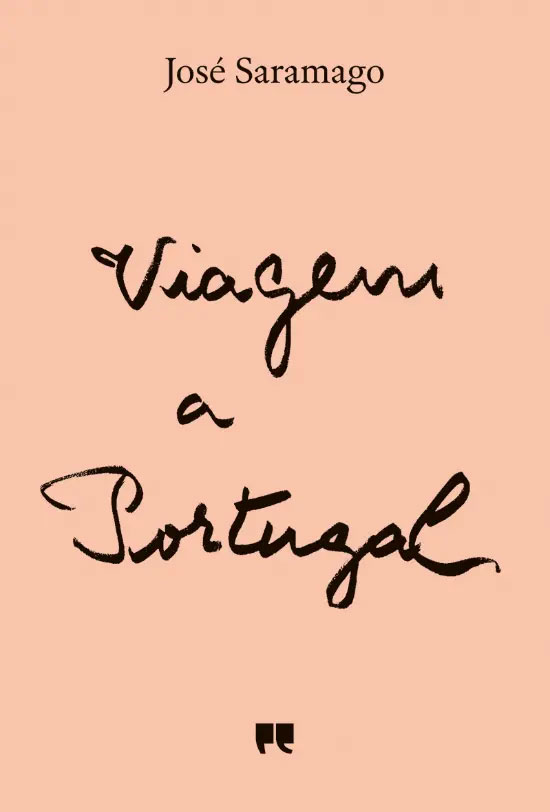
What emerged was neither conventional travelogue nor straightforward memoir, but something far more radical: a literary reinvention of an entire country.
The brilliance lies in Saramago's refusal of the expected. He doesn't catalogue Portugal's monuments in orderly fashion or rank its restaurants by stars. Instead, he constructs a narrative mosaic where medieval chapel ceilings converse with modern street corners, where legendary royal tragedies echo in contemporary village squares, where the weight of history presses against the lightness of present moments.
The third-person narrator – "the traveler" – proves to be a stroke of genius. This slight distancing allows Saramago to be simultaneously intimate and analytical, insider and observer. We experience Portugal through someone who belongs to it yet perpetually rediscovers it, who knows its language in his bones yet finds fresh poetry in everyday speech.
This particular edition enriches the experience by incorporating Saramago's own photographs. These visual documents create a fascinating dialogue with his serpentine prose. While countless tourists have captured the same rivers, forests, and fortresses, only Saramago possessed the literary alchemy to transform observation into revelation.
What we encounter here isn't the sanitized Portugal of tourism brochures. Saramago seeks out shepherds and spinners, studies the peculiar colors of religious icons, investigates why Moorish almond blossoms matter to Nordic princesses, calculates the cost of simply existing in certain towns. Every detail serves not decoration but understanding – an attempt to grasp what makes this particular corner of Europe irreducibly itself.
The author rightly considered this his most ambitious undertaking to that point. "Viagem a Portugal" doesn't imitate existing models; it creates its own template for how literature can map territory not just geographically but emotionally, historically, spiritually.
Reading it, one grasps Saramago's conviction that travel never truly ends – it merely transforms into different kinds of seeing, different paths through the same landscape. Every journey contains infinite others waiting to be taken.