Article
Article
Legacy and Contemporary of Ramalho's Thought
When The Cult of Art in Portugal was published in 1896, it had all the characteristics of being just another one of those books that shake consciences for a brief moment and then slumber on shelves, forgotten by the very indifference they initially fought. But that is not what happened. Ramalho Ortigão's work proved to be one of those rare texts that transcend their historical moment and continue to operate through the decades, shaping attitudes, influencing policies, educating successive generations.
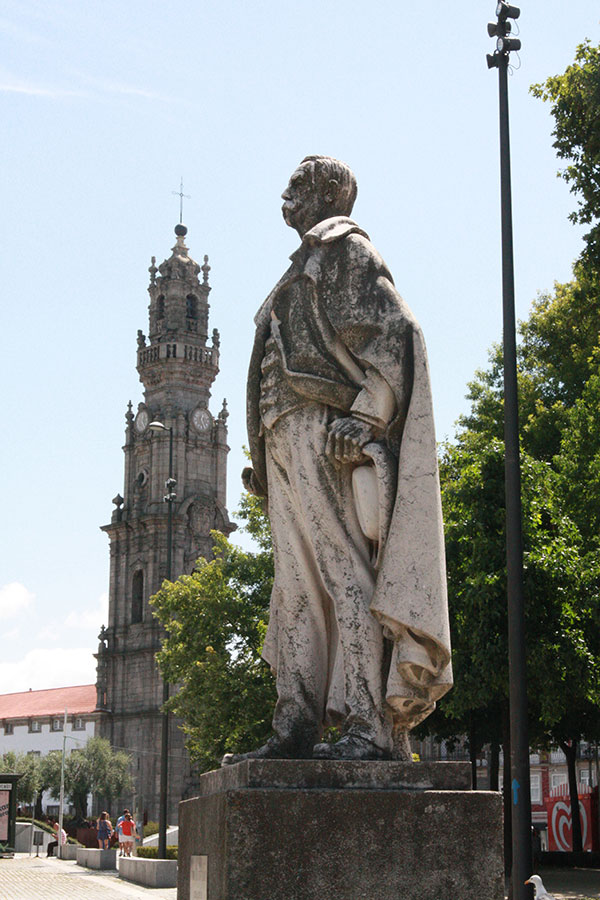
The immediate impact was considerable. The press of the time gave extensive coverage to the book, quoting it extensively, debating its theses, reproducing its most forceful denunciations. Heritage issues ceased to be confined to the restricted circle of specialists and gained public visibility. It was exactly what Ramalho had intended: to transform heritage preservation into a national cause, a matter of civic consciousness that interested not only scholars but the "people" in general.
But the true test of a work does not lie in the noise it provokes at birth—it lies in its capacity to continue influencing long after the author has died. And here The Cult of Art in Portugal passed the test brilliantly. Recent studies, particularly those by Jorge Custódio, have demonstrated the decisive importance of this book in the heritage ideology of the First Republic. When in 1911 the new republican regime reorganized the Artistic Services, creating more robust structures for the protection of national monuments, Ramalho's ideas were there, incorporated into the new policies, guiding the new practices.
And Ramalho himself was there too, not only as an inspirer but as an active protagonist. He was elected president of the Higher Council of National Monuments, a body that came to replace the old Commission and which finally had a more executive character through the creation of an Executive Commission. In the first session of this new Council, Ramalho delivered a speech that synthesized all his thought, his decades-long struggle: "National monuments and art objects are preserved solely through the love of the people, once awakened to consciousness and pride in itself. The mission of art—and therefore of religion and poetry—with which we find ourselves invested consists simply in protecting by teaching to love."
It was heritage pedagogy elevated to a government program. But reality proved, as so often, more resistant than intentions. Ramalho encountered the same obstacles he had denounced in 1896: lack of funds, technical incompetence, bureaucratic inertia, internal disagreements in commissions. His reports, rigorous and well-founded, were not always followed. His proposals for monument classification faced political resistance and entrenched interests. Disillusionment grew, leading to his gradual withdrawal from the work from the early years of the twentieth century.
As Marinho da Silva observed, "the alert launched in 1896 only reverberated five decades later." It was a long deadline—too long to save many monuments that meanwhile were lost or irreversibly degraded. But it was not too long on the historical scale. Ramalho had sown, and subsequent generations reaped. Joaquim Costa, writing in 1937, explicitly recognized it: "If the restoration of national monuments did not originate in the vehement and warm propaganda of this honored writer, we can, however, affirm, without fear of being contradicted, that it contributed largely to one day, albeit a little later, carrying out the most beautiful mission of rescue and purification of our old shames."
2. Lessons for the Present
The temptation, when looking at Ramalho Ortigão's thought more than a century later, would be to treat it as a piece of intellectual museum—admirable for its courage and vision, but dated, outdated, irrelevant to contemporary challenges. That would be a mistake. The questions Ramalho raised remain surprisingly current, and his answers continue to offer useful guidance for present-day dilemmas.
The permanent tension between preservation and development, which Ramalho experienced acutely in his time, has not disappeared—it has intensified. The pressures on historic centers today are incomparably greater than in the nineteenth century: mass tourism, real estate speculation, gentrification, climate change. And yet, the principles Ramalho defended—respect for historical authenticity, need for rigorous intervention programs, primacy of conservation over fanciful reconstruction—continue to be the only ones capable of guiding us through these pressures.
The question of identity and heritage, central to Ramalho, has also not been exhausted. We live in an era of accelerated globalization, cultural homogenization, loss of regional specificities. The risk Ramalho denounced—that Portugal would lose its "proper physiognomy," dissolve into a poorly made imitation of foreign models—has not disappeared; it has transformed. Today it is not about imitating the "Swiss chalet" or the "English cottage," but about replacing traditional architectures with anonymous glass towers that could be in Shanghai, Dubai, or São Paulo.
And Ramalho's lesson remains valid: cultural identity is not preserved by xenophobic isolation or refusal of external influences—Portugal has always been, and must continue to be, a nation open to cultural exchanges. But it is preserved by the capacity for creative synthesis, by transforming received influences into an original result. Batalha was not less Portuguese for having English and Flemish influences—it was more Portuguese precisely for having known how to process them uniquely. The same principle should guide us today.
But perhaps Ramalho's most important lesson is the one he repeated insistently throughout all his work: the need for heritage education of populations. "Monuments are preserved by the love of the people"—and that love is not instinctive, it is not born spontaneously. It must be cultivated, educated, nourished by knowledge. A people who do not know their history, who do not understand the artistic and symbolic value of their monuments, will not protect them. They will let them degrade through indifference or destroy them through ignorance.
This lesson is even more crucial today than in Ramalho's time. We live in a society of immediate gratification, planned obsolescence, fragmented attention. The idea that something is worth preserving for centuries—not for practical utility but for symbolic, aesthetic, historical value—is foreign to the dominant logic. And yet it is this idea, precisely, that distinguishes us from a purely functional, purely presentist, purely materialistic society.
The heritage education that Ramalho advocated was not passive transmission of facts. It was formation of sensibility, cultivation of informed love, development of capacity for appreciation. When he proposed that monuments be accompanied by documentation accessible to the "general public," when he defended that Art History should be taught to everyone and not just to specialists, he was proposing a democratization of knowledge that continues to be an unfinished project.
How many people visit Batalha today—or any other national monument—with effective capacity to understand what they are seeing? How many know how to interpret architectural styles, recognize construction techniques, appreciate sculptural subtleties? Most pass by, take photographs, and leave with a vague impression of "beautiful" but without true understanding. And without understanding there is no lasting love; there is only, at best, superficial admiration.
3. Batalha as Symbol
And so we return, at the end of this journey, to the starting point: the Monastery of Santa Maria da Vitória, Batalha, that "great marble book" that Ramalho took as an emblem of everything that was right and wrong in the Portuguese relationship with their heritage.
Batalha survived. This is the first thing to say, and it is no small thing. It survived the centuries of abandonment that Ramalho denounced. It survived the clumsy interventions of nineteenth-century restorers. It survived the indifference of authorities and the incompetence of master builders. It survived because well-worked stone is stronger than human negligence, and because, despite everything, there were always people—first King Ferdinand II, then Mousinho de Albuquerque, then Ramalho and others—who refused to let it die.
Today, the Batalha Monastery is UNESCO World Heritage. It receives hundreds of thousands of visitors per year. It is the object of scientific conservation care. It has an interpretive center that explains its history and architecture. The Unfinished Chapels, that "incomparable jewel" that Ramalho found consigned to abandonment, are consolidated, clean, respected. They were not "completed"—their historical incompleteness was respected, that opening to the sky which is part of their identity. But they were saved from the ruin that threatened them.
It is a victory. Belated, partial, incomplete—as all human victories are. But it is victory, and should be recognized as such. Ramalho Ortigão, if he could see Batalha today, would recognize that his struggle had not been in vain. It took a century, required the effort of successive generations, cost the loss of many other monuments that did not have the same luck. But in the end, the program he had defended—scientific rigor in restorations, respect for historical authenticity, heritage education of the public—ended up prevailing.
Batalha is, therefore, material testimony to the struggle for heritage consciousness. Each consolidated stone, each cleaned sculpture, each visitor who crosses the portal understanding what they see, is a partial victory for nineteenth-century preservation ideals. Not total, perfect, definitive victory—that does not exist. But possible victory, real victory, victory that is won day by day, generation by generation, through patient work and informed love.
And perhaps this is, after all, the ultimate lesson that Ramalho Ortigão leaves us: that heritage preservation is not a single, definitive act, performed once and then guaranteed forever. It is a permanent commitment, a responsibility that each generation inherits and must renew. Monuments are entrusted to us not as property but as custody. We receive them from past generations and have an obligation to transmit them to future generations in conditions at least as good as those in which we received them.
Ramalho fulfilled his part. He awakened the consciousness of his generation, fought the indifference of his time, sowed ideas that bore fruit long after his death. Now, in the twenty-first century, it falls to us to continue the work. The challenges have changed in form but not in substance. Batalha remains there, open to our care and our negligence. And what we do with it—and with all the other monuments, landscapes, objects, traditions that constitute our heritage—will tell future generations what kind of people we were.
Ramalho Ortigão wrote, more than a century ago, that "national monuments and art objects are preserved solely through the love of the people, once awakened to consciousness and pride in itself." He helped awaken that consciousness. He helped cultivate that love. He helped ground that pride, not in empty myth but in rigorous knowledge. It now falls to us, his involuntary heirs but conscious debtors, to keep alive the flame he lit. Batalha, with its golden stones bathed in the light of sunset, with its Unfinished Chapels open to the infinite sky, stands there as challenge and as promise. Challenge to be worthy of what we received. Promise that, if we are, something essential will survive from us to those who come after.