Article
Article
Ramalho and the Batalha Monastery as a Case Study
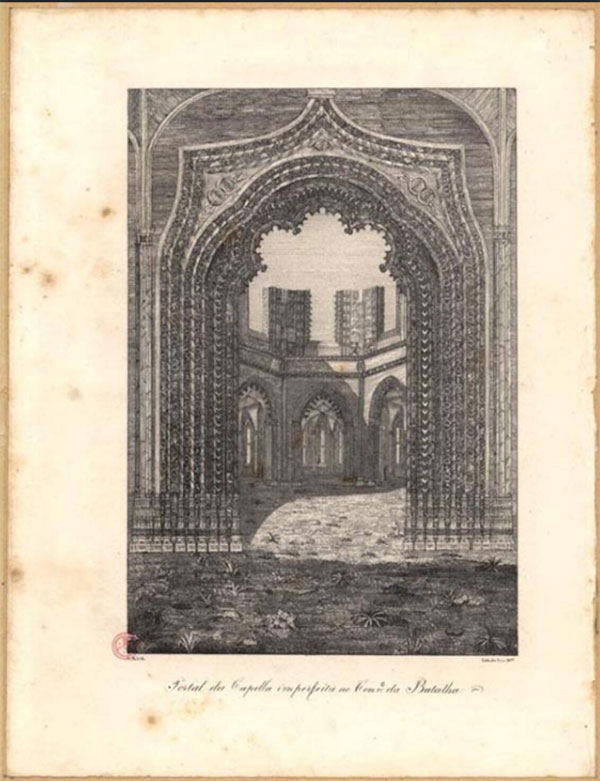
Half a century after King Ferdinand II's visit, Ramalho Ortigão found himself before the same monument, but at an even more critical phase of its history.
In 1892, the first Commission of National Monuments was formed within the Ministry of Public Works, under the initial presidency of Possidónio da Silva, already advanced in age, with leadership quickly passing to Luciano Cordeiro. Although he was not part of the initial group, upon returning from Madrid, Ramalho was quickly integrated into the Commission's work, beginning then a prolific writing of technical reports, some of which had considerable impact.
Among these reports, one stood out about the Batalha Monastery and the works carried out there. What had begun as a technical report transformed into a much broader reflection—almost a philosophical meditation—on the state of national monuments and the attitudes taken thus far for their conservation. This report would give rise to The Cult of Art in Portugal, published in 1896 and dedicated to the Commission of National Monuments.
For Ramalho, Batalha was not just another case of poor heritage management—it was the paradigmatic example of national disaster, the perfect symbol of everything that was wrong in the Portuguese relationship with their cultural heritage. The restoration works carried out at the monastery between 1840 and 1900 constituted, in his implacable analysis, "an authentic disaster, not only due to the countless errors committed, fruit of the ignorance and incompetence of those who had executed them, but also and, principally, for not having obeyed a comprehensive plan."
Ramalho's purpose in dwelling so extensively on this example was not "to enumerate all the errors and vile distortions committed in the monument's restoration works, nor even to critique said restorations and the plans followed." His objective was deeper: he sought to demonstrate "by means of some characteristic and capital facts, that in the restorations undertaken both in this and in other architectural monuments recently repaired at the State's expense," there had been "neither precedence of program, nor prior study, nor determination of method, nor critical approval, nor technical supervision, nor artistic policing of any kind"—elements so necessary and elementary that they should never have been omitted.
The monastery thus functioned as an architectural metaphor for the Portuguese spirit. If Batalha was, in Ramalho's words, "the great marble book, the immortal poem, the Portuguese Divine Comedy, the triumphant affirmation of independent nationality," then its abandonment was a symptom of the loss of that same spiritual independence, of that capacity for self-recognition that defines a nation. The "mirror of the national soul" now reflected a blurred image, damaged by the incompetent hands that had touched it.