Article
Article
Ramalho Ortigão: A Heritage Vocation
José Duarte Ramalho Ortigão was born on November 24, 1836, in the house of Germalde, in the parish of Santo Ildefonso do Porto. His childhood unfolded between his maternal grandmother's estate and the fields of the North, in a coexistence with the rural universe that left him indelible nostalgia and endeared him, forever, to Portuguese rustic life. But it was in adolescence, during convalescence from scarlet fever, that Ramalho's literary destiny was defined irrevocably.
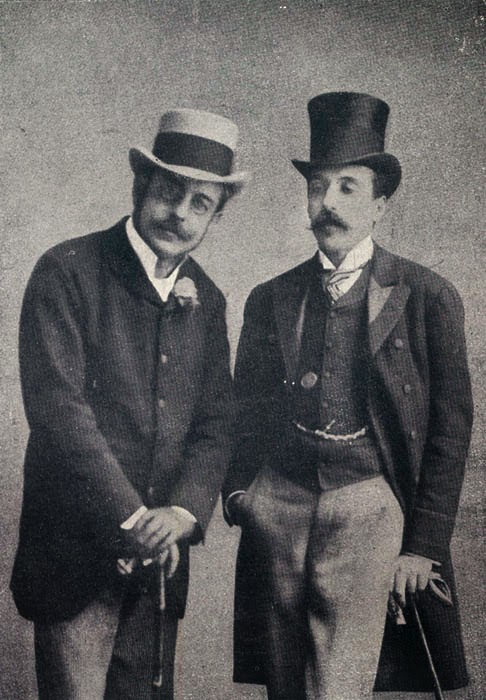
A Youthful Epiphany
The episode is well known. His mother then gave him to read Almeida Garrett's Travels in My Homeland. The impact must have been overwhelming. In his own words, written decades later,
"It remained in my memory, penetrated me entirely, entered so to speak into the composition of my brain and the mass of my blood, that book of such suggestive and overwhelming enchantment."
What Garrett had revealed to him was not only the Ribatejo landscape—"so penetratingly Portuguese, so enlivened with ideas and feelings"—but a "magical power": that of artistic evocation. And more: "a new notion came to me—the notion of homeland. Since that day—now I understand it well—my destiny was fixed. Good or bad, I was fatally destined to be a writer."
This youthful epiphany shaped Ramalho Ortigão's entire career. In 1868, already thirty-two years old, he suddenly moved from Porto to Lisbon, accepting a position as an official at the Royal Academy of Sciences. The move brought him a new circle of friends—the organizers of the Casino Conferences, where Antero de Quental, Guerra Junqueiro, and especially Eça de Queirós stood out, his former French student at Colégio da Lapa who would become an inseparable friend. There began a rich literary career that would lead him to travel tirelessly through the country, "for love," as he himself would write:
"I repeatedly traversed the Serra de Ossa, Arrábida, Monchique, I climbed Marão and climbed Serra da Estrela. For love I slept in the open air in the Ribatejo meadows."
But it was in the last decade of the nineteenth century that Ramalho found his true heritage vocation. In 1894, after returning from Madrid, he was integrated as a member of the Commission of National Monuments, created within the Ministry of Public Works by the first Regenerator government.
The Commission's mission was clear but challenging: to inventory, study, and conserve the nation's historical monuments. Ramalho then began a prolific writing of technical reports, some of which would have a decisive impact on the defense of Portuguese heritage.