Article
Article
Ramalho's Heritage Pedagogy
But the most original—and perhaps most current—aspect of Ramalho Ortigão's thought resided in his pedagogical conception of heritage. For him, the question was not limited to technical issues of conservation or problems of state financing. The question was, fundamentally, educational.
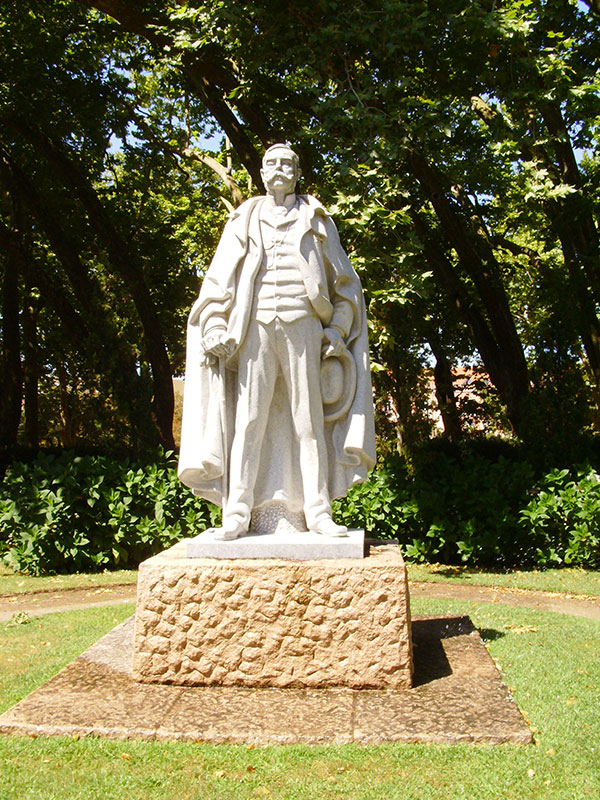
"National monuments and art objects are preserved solely through the love of the people, once awakened to the consciousness and pride of itself"—this phrase, written in The Cult of Art in Portugal, synthesized his entire program. The mission of art—"and therefore of religion and poetry"—consisted "simply in protecting by teaching to love." It was not enough to legislate, create commissions, appoint inspectors. It was necessary to educate the people so that they themselves would become guardians of their heritage.
This vision implied a radical inversion of priorities. Where rulers saw only old buildings that cost money to conserve, Ramalho saw instruments of civic and aesthetic education. Where technicians saw problems of structural engineering, he saw opportunities for collective sensitization. The inventory he proposed was not merely a bureaucratic instrument—it was a pedagogical act that would oblige the country to look at itself, to recognize the wealth of what it possessed.
The inventory records that Ramalho proposed should contain not only technical data (dimensions, materials, state of conservation), but also historical and artistic information accessible to the general public. Each monument should be accompanied by documentation that would allow the common visitor to understand what they were seeing, to situate themselves historically, to appreciate aesthetically. The idea, revolutionary for the time, was that heritage did not belong to specialists—it belonged to the people, and to the people it should be returned through education.
This heritage pedagogy still had a prospective dimension. Ramalho did not want merely to conserve the past—he wanted knowledge of the past to inform present creation. The function of art from the past was not to make the Portuguese captive to nostalgic contemplation, but to "open the way to a national aesthetic more adequate to new times." Heritage should not be a dead museum, but a living school.
This was the mission Ramalho had assumed in writing about Batalha: to awaken the nation to consciousness of itself through the most eloquent example he could offer—the monument that celebrated the very foundation of national independence. If we could not manage to preserve even that monument, what hope would there be for the rest? But if we could manage to save it—not only physically, but also symbolically, transforming it into an object of knowledge and collective pride—then perhaps there would be hope to save the nation itself as well.