Article
Article
São Pedro do Sul: The Paradisiacal Valley in Ramalho's Journey
When Ramalho Ortigão arrived in São Pedro do Sul, still in the late nineteenth century, he did so after an exhausting journey through the mountains of Beira. The Northern railway line did not go beyond Carregado, forcing travelers heading from Porto to Viseu to face mountain paths passable only on horseback.
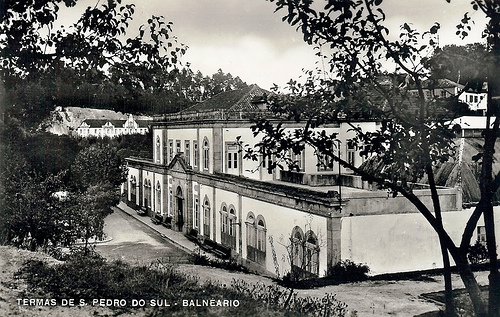
The route was dangerous—at Rego de Chave, the path carved over the abyss was so narrow that riders dismounted, and more than one mule train had plunged down the cliffs. He had crossed Gralheira, Manhouce, and Albergaria das Cabras, sleeping in hay barns on straw or in stables, warmed by the horses' breath while the mountain wind whistled through the cracks. The landscape was harsh and melancholic: small fortified chapels, yellowed flocks led by shepherds in goatskin breeches, old abandoned manor houses with defaced coats of arms and courtyards covered with nettles. It was September, the sun burned on the plains, but high in the mountains the fog was thick and penetrating. He arrived with sore skin and cracked lips—and then discovered paradise: a valley sheltered by Mount Lafão, of tepid temperature, cooled by the Vouga flowing in successive waterfalls, with pleasant houses and an inn where he slept in a good bed and was served "a delicious dish of peppers with potatoes and tomatoes, excellent wine and incomparable grapes."
Contrast as Literary Method
The São Pedro do Sul episode functions as a microcosm of Ramalho's narrative strategy: the construction of violent contrasts that reveal truths about national character and the human condition. The harshness of the mountains—where life unfolds at an ancestral rhythm, amid myths of goats that kill wolves and saints who carry embers in their hands—emerges as a necessary ordeal so that the traveler can truly appreciate the valley's amenity. It is no accident that Ramalho employs a deliberate emotional gradation: the description of the journey accumulates physical discomforts and concrete dangers until the moment of arrival, when the language becomes almost lyrical ("What refreshment! what great amenity! what gentleness!"). This technique of contrast runs through all of "As Praias de Portugal": between glorious past and mediocre present, between untouched nature and artificial progress, between rural authenticity and fake cosmopolitanism. In São Pedro do Sul, however, the contrast is not melancholic—it is redemptive. The valley represents what modernization has not yet corrupted: genuine hospitality, authentic local products, a harmonious relationship between man and nature. The Viseu grapes are not merely superior to those of Douro "for eating"—they are symbols of true wealth, based on quality and not ostentation, on substance and not fame.
Between Mountains and Centuries
Today, visitors arriving in São Pedro do Sul no longer face the dangers of Rego de Chave nor sleep in hay barns—but they continue to discover a valley sheltered between the Arada, Gralheira, and São Macário mountains, where the Vouga still flows in successive waterfalls and the temperature remains mild. Schist villages like Manhouce, once "the most Portuguese of Portugal," preserve ethnographic traditions that Ramalho would recognize: roasted kid from Gralheira, ham and homemade cornbread, aguardente and vinho verde from Lafões. Rural tourism today allows one to experience that "gentle frankness of mountain people" that the chronicler praised, staying in traditional houses or walking mountain trails. Observing with "Ramalho's eyes," note what remains beyond superficial changes: the geometry of the valley protected between mountains, the sound of the waters, the generosity of the land that still produces "incomparable grapes." And above all, that founding contrast—between the mountain's harshness and the valley's gentleness—which continues to define the experience of those who arrive here after crossing the heights. São Pedro do Sul remains, after all, a refreshment: not a lost paradise existing only in memory, but a concrete place where the harmony between man and nature resists, stubbornly, the noise of new times.