Article
Article
The Convent of Christ: Eight Centuries of History
When in 1160 King Afonso Henriques donated the primitive fortress of Ceras to the Order of the Temple, recently founded in Jerusalem and already established in Portuguese territory since 1128, he unleashed a monumental history that would span eight centuries without ever losing its capacity to surprise.
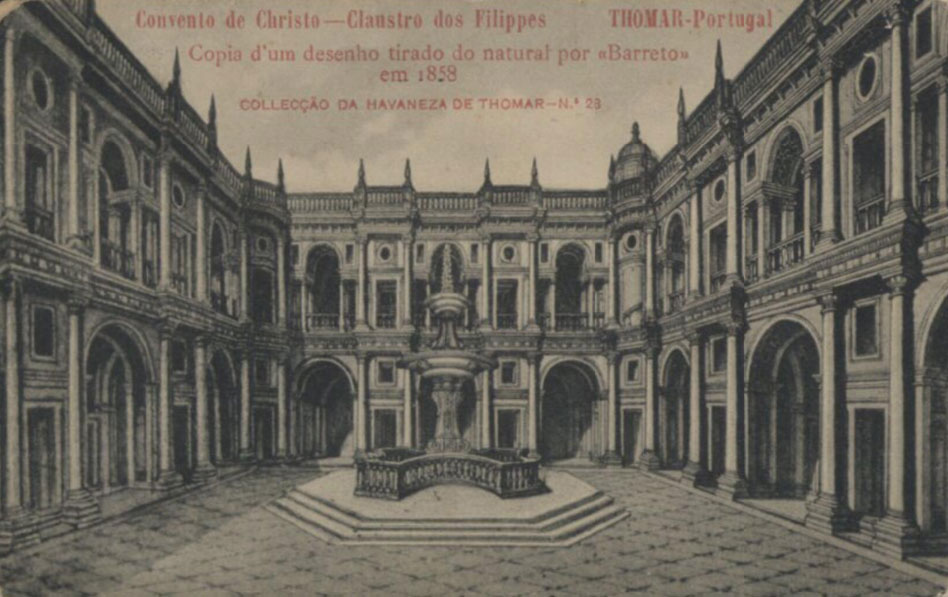
Gualdim Pais, Templar Master and veteran of the Crusades who knew military architecture in Palestine, began in 1160 the construction of a castle—that of Tomar—in a new position, transforming it into one of the most powerful military bastions of the era.
The dissolution of the Order of the Temple in 1312, largely due to the influence of French monarch Philip IV, who accused the Templars of heresy, could have meant the end of this fortress. Portugal, however, negotiated a solution of continuity. King Dinis obtained papal authorization to create the Order of Christ, direct heir to the goods, privileges, and military vocation of the Templars.
The new Order maintained Tomar as its headquarters, preserved the Templar cross (slightly modified, in red on a white background) and conserved the mission of defending Christendom.
It was under the management of Prince Henry, appointed governor and administrator of the Order of Christ, that Tomar acquired an unprecedented dimension. Until his death, the Prince would transform the convent into one of the financial and symbolic engines of Portuguese maritime expansion.
The sails of the caravels bore the cross of the Order of Christ, a symbol that converted the maritime adventure into an ecumenical crusade. Tomar ceased to be a land frontier fortress to become the spiritual rearguard of a maritime frontier in perpetual expansion.
The artistic apogee of the monastic complex coincides with the reign of King Manuel I (1495-1521), a monarch who inherited a growing maritime empire in the Indian Ocean and added to it an unprecedented architectural program, designed to materialize in stone the glory of the kingdom and the divine legitimacy of Portuguese expansion in the sixteenth century.