Article
Article
The Metaphor of Threatened Heritage
The contrast was devastating. On one side, the glory of the foundation: a victorious king, the greatest architects of Europe summoned, the entire nation committed to a work that would last generations and forever celebrate the conquered independence.
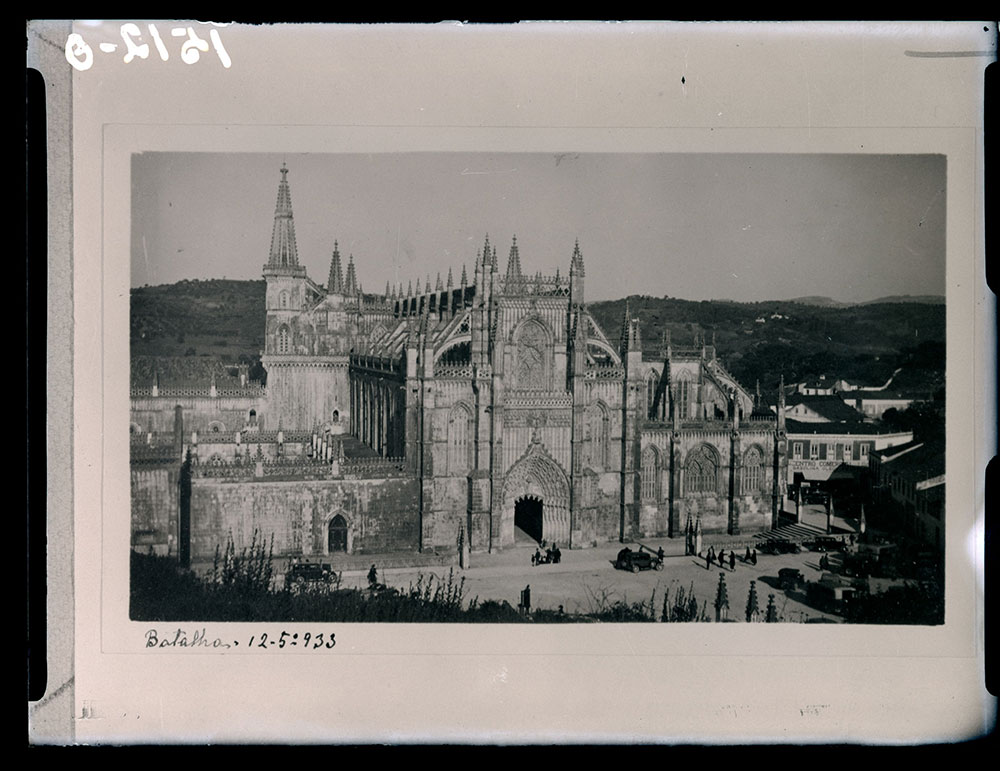
On the other, nineteenth-century abandonment: incompetent master builders replacing fundamental structural elements, interventions that offended "the most rudimentary knowledge of art," chapels consigned to neglect, stones disintegrating, the "immortal poem" transforming into ruin through pure national negligence.
Ramalho Ortigão did not write as a distant historian or as a neutral technician. He wrote as an indignant chronicler, as a nonconformist guardian who saw the national treasure being squandered before general indifference. His prose, usually elegant and controlled, became vehement when dealing with the state of monuments: "Cursed be the hands that profaned you!" Garrett had exclaimed over Santarém, and Ramalho echoed that cry. But where Garrett had limited himself to lament, Ramalho proposed action.
The restoration works carried out at Batalha between 1840 and 1900 constituted, in his analysis, an "authentic disaster," an "architectural barbarism" resulting from the "ignorance and incompetence of those who had executed them." There had been no "comprehensive program," no "prior study," no "determination of method," no "critical approval," no "technical supervision," no "artistic policing of any kind." It was improvisation, haste, misunderstood economy—everything most contrary to the spirit that had presided over the original construction.
The Unfinished Chapels, that "incomparable jewel of the most characteristically regional Portuguese architecture," had been simply abandoned, "consigned to abandonment, in the face of the disinterest shown by local authorities and by the organizations responsible for their conservation and preservation." It was as if the nation had lost the capacity to recognize itself in its own monuments, as if there were an abyss between the Portugal that had built Batalha and the Portugal that let it fall into ruin.
The metaphor was crystalline: threatened heritage was the threatened nation itself. If the monument was an "irreproachable testimony to history," its abandonment was collective amnesia, was loss of identity, was the slow dissolution of what made Portugal a distinct and coherent entity. And hence the urgency of preservation: it was not merely about saving ancient stones—it was about saving memory, tradition, the very national soul.
Ramalho knew he was writing for two distinct audiences. On one hand, political decision-makers and responsible technicians, to whom he provided scientific arguments, European examples, concrete proposals for reorganizing conservation services. On the other, the "people" in a broad sense, whom he sought to teach to love heritage through the revelation of its beauty and meaning. Heritage education was, in his vision, simultaneously cause and consequence of preservation: only an educated people would protect its monuments; but only effective protection would allow monuments to fulfill their educational function.
This was the mission he assumed in writing The Cult of Art in Portugal: to awaken the nation to consciousness of itself, to protect by teaching to love, to transform indifference into zeal, abandonment into worship. And the Batalha Monastery, with all its symbolic weight and all its threatened beauty, was the perfect example—the case that synthesized all others, the most visible wound in a national body that urgently needed healing.