Article
Article
The Monastery of Santa Maria da Vitória: Historical and Symbolic Context
Among all Portuguese monuments, the Batalha Monastery occupied, for Ramalho Ortigão, a singular and almost sacred place.
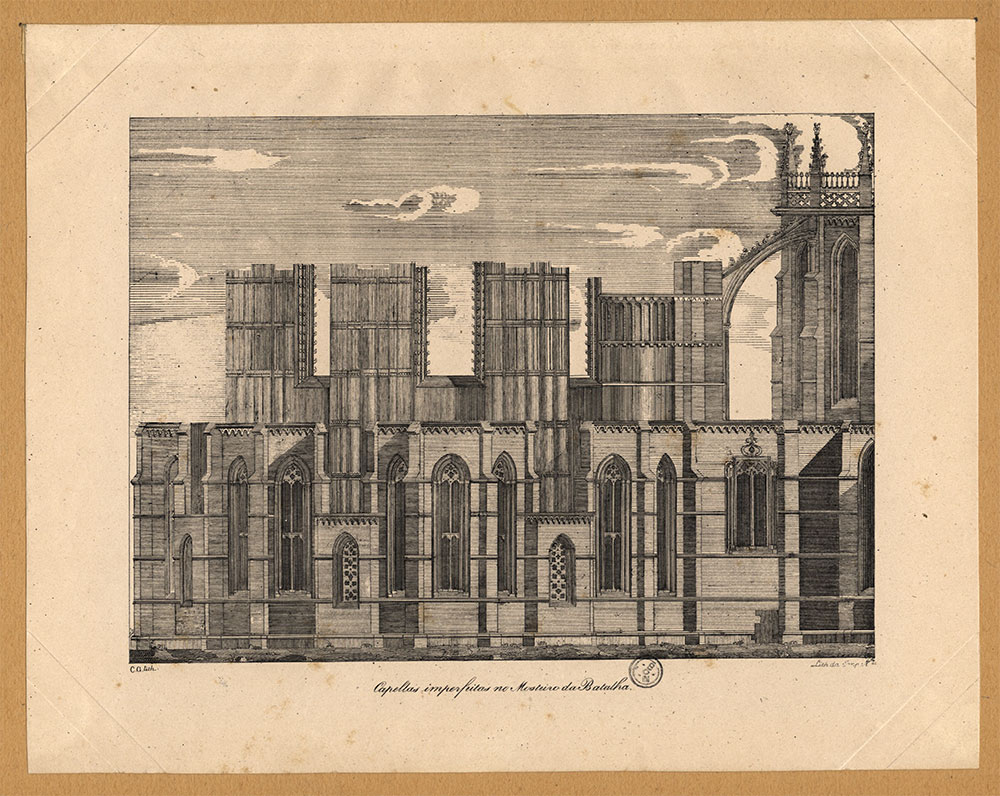
It was not merely a remarkable building—it was the supreme symbol of nationhood, "the great marble book, the immortal poem, the Portuguese Divine Comedy, the triumphant affirmation of definitive independent nationality." Understanding Ramalho's passion for Batalha requires first understanding the symbolic weight this monastery has always held in Portuguese historical consciousness.
The monument's origin dates back to the founding moment of the Avis Dynasty. On the afternoon of August 14, 1385, in the fields of São Jorge near Aljubarrota, the forces of King João I, Master of Avis, confronted the Castilian army of Juan I of Castile, who claimed the Portuguese throne by right of marriage to Beatriz, daughter of King Fernando. The Portuguese victory, militarily commanded by Constable Nuno Álvares Pereira and diplomatically sustained by the legal arguments of João das Regras, sealed Portugal's independence from Castile and inaugurated a dynasty that would last nearly two centuries.
Before the battle, tradition tells us, King João I made a vow to Our Lady: if he won, he would build a magnificent monastery in her honor. Fulfilling his promise, in 1386 the king laid the first stone of the Monastery of Santa Maria da Vitória, commonly known as the Batalha Monastery. As Friar Luís de Sousa writes, a privileged witness having lived in the convent, "The king had summoned from distant lands the most celebrated architects known; he had convoked from all parts skilled and learned stonemasons; he had invited some with honors, others with generous salaries, and obliged many with both together."
The monastery's construction extended over generations. King João I began the church, the cloister, and the Founder's Chapel, where he himself would be buried alongside Queen Philippa of Lancaster. His son, King Duarte, commissioned the famous Unfinished Chapels, intended as a royal pantheon, which would remain eternally incomplete—open to the sky like an architectural wound of disturbing beauty. King Afonso V continued the works, and King Manuel I, already in the full sixteenth century, ordered the execution of the Manueline portal and other finishing touches in flamboyant Gothic style, with that characteristic decorative exuberance of the period.
The result is an architecture of extraordinary complexity and technical virtuosity. The Portuguese Gothic of Batalha is simultaneously austere and exuberant, structural and decorative. The ribbed vaults rise to vertiginous heights; the flying buttresses support the walls with mathematical elegance; the pinnacles and stone lacework defy gravity and time. In the cloister, the delicacy of the Manueline arcades contrasts with the military severity of the Founder's Chapel. In the Unfinished Chapels, the monumental portal, with its concentric arches laden with vegetal and geometric sculptures, frames a circular space of seven hexagonal chapels that were never covered—as if the sky were the only possible roof for such ambition.
Stylistically, the monastery represents the convergence of European influences—English, Flemish, French—processed by Portuguese masters into an original synthesis. It is Gothic, but also unmistakably Portuguese: in the way Mediterranean light shapes the spaces, in the relationship with the landscape, in the decorative motifs that anticipate the Manueline style. For all these reasons, it was the monument that best embodied, in the eyes of Ramalho and his contemporaries, the "genius of the race" and the "mental autonomy" of the nation.
But there was yet another political dimension that made Batalha especially significant in the fin-de-siècle context. The monastery represented not only a military victory, but an affirmation of sovereignty won by the "will of the people"—a formula that resonated powerfully in an era when the nature of the nation and the legitimacy of regimes were being debated. It was the monument of the dynasty born from the revolution of 1383-1385, from the popular choice of a bastard king against Castilian dynastic pretensions. Aljubarrota and Batalha were, in this sense, founding myths constantly reactivated: "nothing more beautiful, in national history, than the feat of arms at Aljubarrota and the monument of Our Lady of Victory, destined to commemorate that feat, by vow of King João I."
This was the monument that Ramalho had found consigned to abandonment and degradation at the end of the nineteenth century. And that is why his voice became particularly urgent and indignant.