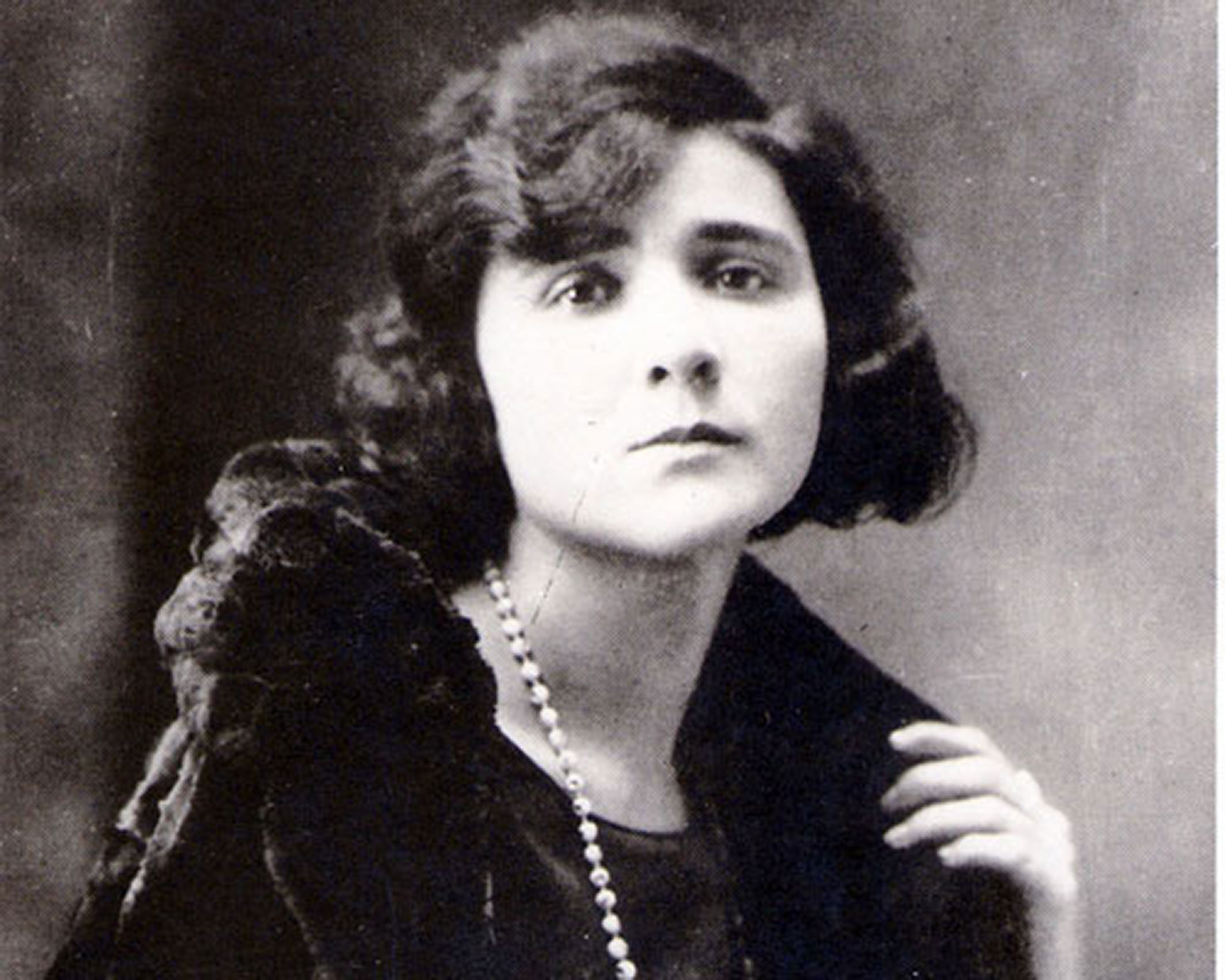
On a December afternoon in 1895, a child was born in Vila Viçosa who would grow to become one of the most singular voices in Portuguese literature. Baptized as Flor Bela Lobo, the girl was the daughter of an unofficial relationship between João Maria Espanca and Antónia da Conceição Lobo. Although the baptismal registry indicated "unknown father," it was João Maria's wife, Mariana Espanca, who welcomed the little girl as godmother and raised her with tenderness. Her childhood unfolded in apparent tranquility, enveloped in family affection. Later, the poet herself would recall having grown up "in a lace cradle surrounded by affection," a carefree and joyful existence. However, from very early on she revealed an uncommon sensitivity: at eight years old she was already composing verses, suffered from insomnia, and felt an inexplicable melancholy before the world.
The First Verses and Her Formation
Her initial writings date from 1903 – three quatrains titled "A Vida e a Morte" and a sonnet about divine goodness – works that demonstrated surprising maturity for someone who was only eight years old. This artistic precocity walked hand in hand with the first signs of the nervous illness that would accompany her throughout her life. In 1907, she was already complaining of extreme fatigue and persistent headaches.
That same year, the family moved to Évora, allowing Florbela to continue her studies at the city's lyceum. It was there that she began signing as Florbela d'Alma, a name to which she would add her paternal surname. At nineteen, on her very birthday, she married Alberto Moutinho, a school and lyceum classmate. From this phase survives a precious notebook, "Trocando Olhares" , which gathers three short stories and 144 poems – the embryo of her future books.
The Battle for Publication
Determined to see her compositions in print, she contacted the magazine "Modas e Bordados," a supplement of the newspaper "O Século." In 1916, some verses were finally published, but with unauthorized alterations – "improvements" imposed by third parties that transformed her poems. This editorial intrusion did not discourage her: she continued writing, planning various literary projects, including "Alma de Portugal", which she would ultimately abandon.
A decisive encounter occurred when she sent the compilation "Primeiros Passos" to the intellectual Raúl Proença. He, although correcting her verses, recognized the young poet's genuine talent, encouraging her to persist. In 1919, Proença would edit the "Livro de Mágoas", marking Florbela's official debut on the Portuguese literary scene.
Lisbon, Law, and the Turns of Fate
In 1917, Florbela completed lyceum and enrolled in the Faculty of Law in Lisbon – although her desire was to study Letters. Her marriage to Alberto Moutinho began to crumble: after a miscarriage, she withdrew to Olhão to recover, but her return to Lisbon consummated the definitive separation.
It was then that she met António Guimarães, an ensign in the Republican National Guard. Divorced in 1920, she married Guimarães the following year and they moved to Porto. Her fragile health led her to consult lieutenant-physician Mário Lage, also of the GNR – an encounter that would have future consequences.
Soror Saudade: The Birth of an Icon
In 1922, the couple transferred to Lisbon, where António Guimarães assumed duties at the Ministry of War. Florbela was preparing a book titled "Claustro das Quimeras", but found herself obliged to change the title due to the publication of a homonymous work by Alfredo Pimenta. Thus was born, in January 1923, the "Livro de Soror Saudade" – a title inspired by a sonnet that her colleague Américo Durão had dedicated to her two years earlier. This name, "Soror Saudade," would become inseparable from her poetic identity. A second miscarriage further debilitated her health, taking her to Guimarães for treatment. There she reencountered Mário Lage and initiated a relationship that would precipitate the end of her second marriage. The divorce from António Guimarães was finalized in 1925, followed by marriage to Mário Lage – for the first time with a religious ceremony.
The Last Years: Between Prose and Tragedy
Between translations of French novels and collaborations in the newspaper "D. Nuno" of Vila Viçosa, Florbela's life seemed to stabilize. However, in 1927, a tragedy deeply shook her: her brother Apeles, an aviator pilot, died in an accident on the Tagus, his body never having been recovered. This loss plunged her into an increasingly severe depression.
She temporarily abandoned poetry, dedicating herself to the short stories that would form "Dominó Preto" and "As Máscaras do Destino" – the latter a painful homage "A meu irmão, ao meu querido morto." Despite the quality of the work, no publisher would accept publishing her books.
The Final Chapter
In the last year of her life, she established a friendship with Guido Battelli, an Italian professor at the University of Coimbra. She returned to poetry, publishing in the magazine "Portugal Feminino." She recorded her thoughts in a "Diário do Último Ano" and prepared "Charneca em Flor" , whose typographic proofs she still managed to review. On December 8, 1930, on the day she turned thirty-six, Florbela Espanca voluntarily ended her existence through an excessive dose of barbiturates. Only one month later, in January 1931, "Charneca em Flor" arrived in bookstores through Battelli's efforts. Reissues would follow, posthumous works and, in 1934, the publication of the "Sonetos Completos" with a preface by José Régio – consolidating Florbela's place as the author of some of the most beautiful sonnets in the Portuguese language.
Literary Note: Florbela's work dialogues with Decadentism, Symbolism, and Neo-Romanticism, evoking authors such as Antero de Quental and António Nobre. Her poetry explores powerful antitheses – death and life, love and pain, truth and deception – in a feminine voice of rare emotional intensity, singular in the literary context of the first decades of the twentieth century in Portugal.