Article
Article
The Unfinished Chapels: An Incomplete Poem in Stone
If the Batalha Monastery was, for Ramalho Ortigão, "the great marble book, the immortal poem, the Portuguese Divine Comedy," then the Unfinished Chapels were the most mysterious and disturbing canto of that poem—the one that remained suspended mid-verse, open to the sky like an unanswered question, beautiful precisely because of its incompleteness.
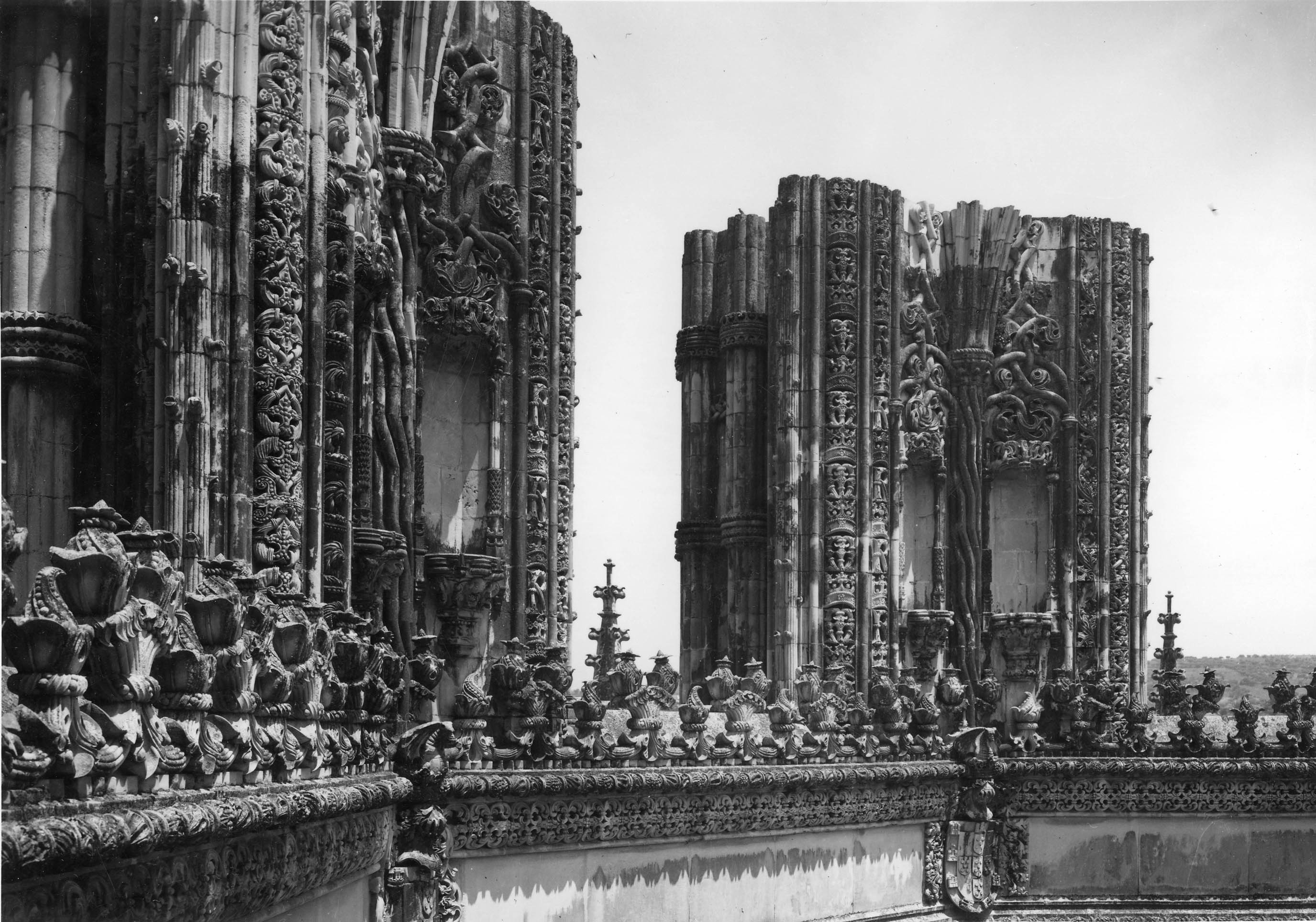
There is nothing in all Portuguese architecture that compares to the strange and melancholic beauty of these chapels that were never finished and which, for that very reason, achieved a perfection of a different order: the perfection of the fragment, of the premeditated ruin, of the interrupted dream that remains more eloquent than any complete realization.
1. The Genesis of an Interrupted Dream
The history of the Unfinished Chapels begins with a king who died too soon and a dream left orphaned. Around 1437 or 1438, King Duarte—the philosopher-king, author of Leal Conselheiro, a man of profound melancholy and refined thought—commissioned the construction of a new royal pantheon, separate from the Founder's Chapel where his father King João I rested. It would be an octagonal space surrounded by seven hexagonal chapels, an ensemble of bold geometry and hermetic symbolism, destined to house the kings of the House of Avis and their queens.
But King Duarte reigned only five years. He died in 1438, at only forty-six years of age, victim of the plague, leaving a kingdom in crisis, a minor son, and a monumental work barely begun. Queen Leonor of Aragon, his widow, tried to keep the project alive, but political circumstances—the turbulent regency, the struggles between noble factions, the military campaigns in Morocco that ended in the disaster of Tangier—did not allow the dead king's great architectural dream to continue.
King Afonso V, when he came of age and consolidated his power, preferred to invest in other parts of the monastery. He had the magnificent Royal Cloister built, with elegant design and harmonious proportions. Later, King João II and King Manuel I would pay attention mainly to the Jerónimos, to the Convent of Christ in Tomar, to the new foundations that celebrated the Discoveries and the wealth that came from them. The Unfinished Chapels remained there, incomplete, as mute testimony to a project that its patron's death had condemned to eternal suspension.
In the reign of King Manuel I, around 1509-1515, Master Huguet—the great architect who had already worked on the Royal Cloister—was called to complete or at least consolidate the structure of the Chapels. It was he who executed the monumental portal that still takes our breath away today: a structure of golden limestone sixteen meters high, covered by an infinitely complex web of sculptures, where vegetal motifs, heraldic elements, religious symbols intertwine, all worked with a delicacy that defies the very nature of stone.
But not even Master Huguet completed the Chapels. Perhaps there was no money. Perhaps the project was technically impossible—those vaults with multiple ribs, those intersecting arches that seemed to defy the laws of gravity, required technical virtuosity that went beyond what even the best medieval masters could guarantee. Or perhaps—and this is the most poetic interpretation—there was something deliberate in this incompleteness, as if the builders had understood that certain works gain more by remaining unfinished, open to the imagination of those who contemplate them.
2. Architecture as Metaphor for Human Incompleteness
Approach the portal of the Unfinished Chapels on a summer afternoon, when the golden light of sunset illuminates the limestone and makes it seem incandescent. Raise your eyes to the concentric arches that succeed one another, each covered by a stone filigree so delicate it seems impossible to have been carved by human hands. Pass through the portal and enter the circular interior space. And then, inevitably, your gaze will be pulled upward—to the void where the vault should be, to the perfect circle of open sky that crowns the building.
It is an aesthetic shock of rare intensity. We are accustomed to complete buildings, closed, protected. But the Unfinished Chapels refuse to give us that comfort. They are seven hexagonal chapels arranged in a circle, each with walls raised to considerable height, with the springings of the ribs that should support complex vaults—but the vaults never came. There remained, forever, the stone stumps pointing to the sky, like fingers interrupted mid-gesture.
The flamboyant Gothic tracery reaches extreme complexity here. Each column is a bundle of slender shafts. Each capital is an explosion of carved foliage. Each arch is supported by a web of ribs that intersect according to geometric patterns of mathematical sophistication. There are pinnacles that rise like stone lances, gargoyles peering from corners, heraldic shields interspersed with Christian symbols, stone flowers that seem still wet with dew.
And yet—or perhaps precisely because of this—there is something profoundly human in this incompleteness. The name "Imperfeitas" (Imperfect) that the chapels received does not indicate error or failure; it indicates, rather, an existential condition. They are imperfect as human lives are imperfect, the projects we begin and do not finish, the dreams that death or circumstance interrupts. They are imperfect, but this imperfection does not diminish them—it elevates them to a different category, that of testimony to human ambition that always exceeds the capacity for realization.
The opening to the sky thus becomes a multiple metaphor. It is an opening to the transcendent, to the infinite that no human construction can contain. It is also an opening to time, to the passing clouds and succeeding seasons, to the falling rain and sun that warms the stone. It is, finally, an opening to incompleteness as humanity's proper condition—we are all, in our way, unfinished chapels, incomplete projects, poems suspended mid-verse.
3. The Invisible Sculptor and the Speaking Stone
Who sculpted this marvel? Documents say it was Master Huguet, an architect whose training was likely Flemish or French but whose work is unmistakably Portuguese. But behind Huguet were dozens, perhaps hundreds of anonymous craftsmen—stonecutters, sculptors, stone carvers—whose names have been lost but whose genius remains engraved in stone.
The limestone of Batalha is a noble stone, fine-grained and warm in color ranging from cream to gold depending on the light. It is a stone that works well when fresh, but hardens with time, becoming almost indestructible. And it was this stone that medieval masters worked as if it were lace, as if it were malleable wax, as if it were any docile material and not the hard and rebellious material it actually is.
Look at the portal columns. They resemble palm tree trunks or petrified marine corals, as Ramalho would write about the Manueline window at Tomar—that other masterpiece of late Portuguese Gothic where "the columns are coral polyps from the deepest ocean reefs, and trunks of that palm whose shade covered the cradle of civilization on the Mediterranean coast." In the Unfinished Chapels we find the same impulse: to transform stone into living organism, to make mineral imitate vegetable, the inert simulate the dynamic.
The motifs intertwine in vertiginous complexity. There are acanthus leaves stylized according to classical canons. There are vines that coil in ascending spirals. There are flowers that bloom on capitals as if they were hanging gardens. There are royal coat of arms—the Portuguese quinas, the cross of the Order of Christ, the armillary spheres that would become the symbol of King Manuel's reign. There are tiny angels almost hidden in the folds of the stone, waiting for an attentive gaze to discover them.
And all this was carved by hand, with simple tools—chisels, hammers, compasses—by men who worked outdoors, exposed to winter cold and summer heat, earning modest wages, without hope of individual glory but with the certainty that they were participating in a work that transcended them. The stone they worked five hundred years ago continues to speak to us today, in a language that needs no words—the language of form, proportion, light and shadow, of human effort crystallized in lasting beauty.
4. Ramalho Before the Ruins: The Chronicler's Lament
When Ramalho Ortigão visited the Unfinished Chapels at the end of the nineteenth century, he found them in a state that broke his heart. The original incompleteness—the absence of vaults, the opening to the sky—was one thing; that was the inherent beauty of the project, its own poetics. But the abandonment to which the Chapels had been consigned was something very different: it was pure negligence, criminal neglect, indifference bordering on vandalism.
Invasive vegetation grew in the interstices of the stone. Brambles and briars took root in cracks opened by erosion, progressively widening them. Loose stones lay on the ground, displaced by frost or rainwater infiltration. The most delicate sculptures showed faces worn by weather, as if a stone leprosy were consuming them. The limestone, exposed directly to acid rain and thermal variations without any protection, was beginning to crumble in the most exposed parts.
The contrast between the delicacy of the original sculpture and the brutality of neglect was unbearable for someone who, like Ramalho, had artistic sensibility and historical consciousness. There was that "incomparable jewel of the most characteristically regional Portuguese architecture"—and no one lifted a finger to protect it. The organizations responsible for the monument's conservation looked at the Unfinished Chapels and saw... what? A problem too complex? A cost too high? Or simply saw nothing, blinded by indifference and the inability to recognize the value of what they had before their eyes?
For Ramalho, the Chapels open to the sky became an even more poignant metaphor than he himself could have imagined: they were the nation's exposed wound, the sore that would not heal because no one cared for it. If the Batalha Monastery was the architectural body of Portuguese nationality, then the Unfinished Chapels were the part of that body left to abandonment, slowly gangrening while everyone looked the other way.
The incomprehension was the most painful aspect. Ramalho could understand—though not excuse—that lesser-known monuments, scattered across the country, suffered from neglect due to lack of means or attention. But the Unfinished Chapels were not obscure. They were there, at the heart of the nation's most symbolic monument, visited by all who went to Batalha. And yet, the jewel continued abandoned precisely by those who should care for it: local authorities, state bodies, all those who had institutional responsibility for heritage.
5. What the Stones Tell Us About Ourselves
But perhaps the stones of the Unfinished Chapels, in their silent eloquence, were saying something deeper about the Portuguese nation. Perhaps they functioned as a cruel mirror of national discontinuity—that Portuguese tendency to begin great projects and not finish them, to dream very high and realize only halfway, to abandon magnificently initiated works as soon as a new object of attention appears.
The unfinished project of the Chapels was, in this sense, paradigmatic of successively abandoned national projects. King Duarte had died leaving the pantheon incomplete; his successors turned their attention to other monuments, other priorities. It was the history of Portugal in miniature: the cycle of Discoveries gloriously begun and then left to the mercy of administrative incompetence; the colonial empire built with heroism and lost through carelessness; the wealth of Brazil squandered instead of invested; project after project, generation after generation, always the same pattern of initial enthusiasm followed by progressive disinterest.
There was, however, a crucial distinction that Ramalho made a point of emphasizing: one thing was the beauty of imperfection when respected, quite another was the horror of imperfection when neglected. The Chapels could remain without a vault—that was part of their historical identity, their own poetics. But they could not be left to crumble from lack of basic maintenance. The original incompleteness was noble; ruin through negligence was shameful.
This distinction contained a lesson about intergenerational responsibility. Each generation receives from previous ones a legacy it did not choose but has an obligation to preserve and transmit to future generations. The medieval builders of the Chapels had done their part—they had erected a structure of extraordinary beauty and complexity, they had left testimony to their era. King Manuel's generation had not completed the work, but had preserved what existed. Subsequent generations, until the nineteenth century, had maintained the Chapels in reasonable condition.
But the nineteenth-century generation—Ramalho's generation—was failing in that responsibility. It was receiving a precious legacy and letting it degrade. And this failure was not merely technical or administrative—it was moral. It was a form of disregard for the ancestors who had built the work, and for the descendants who would have the right to receive it in dignified conditions.
The stones of the Unfinished Chapels said all this without words. They said it through the widening cracks, the crumbling sculptures, the vegetation invading what should be sacred space. They said it through the glaring contrast between the ambition of the original builders and the mediocrity of their alleged conservators. They said it, above all, through their stubborn presence, resisting abandonment, refusing to collapse completely, as if patiently waiting for a more responsible generation to finally come care for them.
6. Contemporary Epilogue: Belated Redemption
The wait of the Unfinished Chapels was long—almost a century after Ramalho Ortigão's appeals. But the time of redemption finally arrived, albeit late.
In 1983, the Batalha Monastery was classified as World Heritage by UNESCO. The distinction was not merely honorary—it brought concrete conservation obligations, international funding, expert scrutiny. The Unfinished Chapels, as an integral part of the monumental ensemble, finally benefited from the attention Ramalho had demanded a century earlier.
Throughout the twentieth century and early twenty-first, successive restorations were carried out with scientific criteria that Ramalho would have applauded. No attempt was made to "complete" the Chapels—their historical incompleteness was respected, that opening to the sky which is an essential part of their identity. But existing structures were consolidated, stones were cleaned of parasitic vegetation, dangerous fissures were repaired, discreet drainage systems were installed to control rainwater.
The works were conducted by architects and engineers specialized in heritage, supported by art historians, archaeologists, geologists. There was finally that "program meditated in all dimensions" that Ramalho had demanded: prior studies, rigorous methodology, technical supervision, absolute respect for historical authenticity. There was the "artistic policing" he had called for, in the form of oversight bodies ensuring that any intervention is justified and documented.
Today, the Unfinished Chapels receive thousands of visitors per year—tourists from around the world, but also architecture students, art history researchers, ordinary people who come simply to contemplate one of the most extraordinary examples of late European Gothic. There are guided tours explaining the construction history, the symbolism of the sculpted motifs, medieval stone-working techniques. There are academic publications analyzing every structural and decorative detail. There is, above all, a collective consciousness that these stones are precious, irreplaceable, deserving of the best care we can give them.
It is the posthumous vindication of Ramalho's appeal: educate to preserve. The Chapels are today the object not only of technical conservation, but of informed love—precisely what Ramalho had always advocated. "Monuments are preserved by the love of the people, once awakened to consciousness and pride in itself," he had written. And he was right: only when the Portuguese people—or at least a significant part of it—understood the value of those chapels, only then could they be effectively saved.
The Unfinished Chapels remain, then, as a symbol of architectural resilience. They survived centuries of abandonment. They survived earthquakes and storms. They survived the incompetence of nineteenth-century restorers and the indifference of authorities. They survived because well-worked stone is more resistant than human negligence, because genuine beauty has a capacity for permanence that transcends circumstances.
But they are also a perennial warning. To look at them today, clean and consolidated, should not make us forget the centuries when they were on the brink of collapse through pure neglect. The lesson they teach is not only about the past—it is about the present and the future. Each generation has monuments under its responsibility. Each generation will have to choose between preserving with zeal and love, or abandoning with indifference and shame.
Ramalho Ortigão, if he could see the Unfinished Chapels today, would recognize that his struggle had not been in vain. It took a century, but the message had finally gotten through. The stones remain open to the sky—as they always were, as they always will be. But now they are cared-for stones, respected, loved. They are, after all, the unfinished poem that finally found the readers it deserved. And they continue to speak, in that silent language that only architecture knows, about the beauty of imperfection, the dignity of the fragment, and the eternal responsibility of the living toward the works of the dead.